Wednesday, January 31, 2007

Kaun Banega Crorepati

Kaun Banega Crorepati (Hindi: Popularly known as KBC) is an Indian game show based on the UK show Who Wants to Be a Millionaire?. This version's title literally translates to "Who will be a ten-millionaire?".

The show first aired in 2000 and was hosted by Amitabh Bachchan. This episode was the first appearance of Amitabh Bachchan on Indian television. In 2005, the show was restarted after a four-year hiatus, and renamed Kaun Banega Crorepati Dwitiya (Kaun Banega Crorepati the Second, or KBC2) in which the prize amount was doubled to 2 crore rupees. It was abruptly ended by STAR Plus after the host Amitabh Bachchan fell ill. Although it was originally announed that Bachchan would return, Shahrukh Khan was selected to replace him.


KBC continues to be produced by Siddhartha Basu's Synergy Communications. The new 2007 series began airing on 22nd January 2007. Phone lines opened from 22nd December 2006, 8PM. The key sponsors of the new series are AirTel, Unit Trust of India (UTI Mutual Funds) and ITC.

Access your PC from anywhere - try GoToMyPC® free now

India's 40 Richest

India's rising fortunes are underscored by the increasing prosperity of its wealthiest citizens.


Members of our third annual ranking of India's 40 richest businesspeople are worth a collective $170 billion, up from $106 billion last year. India's top 10, worth $112 billion, account for two-thirds of that wealth. The rankings include 36 billionaires, 9 more than last year. India's hot stock market, up 39% this year, and its robust real estate market helped swell most fortunes.

The minimum net worth needed to make the cut rose to $790 million, up from $590 million. More @ Forbes...

Tuesday, January 30, 2007

Entertainment Earth

Action Figures, Gifts and Collectibles. This item is currently In Stock.


If you order this item today, we will first send you an Order Confirmation email, then verify that the item is still In Stock. Some In Stock items may actually sell out from the time you order to the time you receive a second Order Status email. This is due to the fact that multiple customers may order the same item at the same time. If after we confirm the item is actually In Stock, we will charge your credit card and begin to process your order.


Friday, January 26, 2007

Personal Shopping

Welcome to our little corner of the world! What we hope you will find here is nothing short of the finest goods available at the lowest possible prices. And we've worked hard to make that happen.

We've searched the world over and reviewed literally thousands of products, just so you can come to one place and find everything you need. The hard work has already been done for you. We've already set the high standards and made the rigorous demands. As a result, we are confident in guaranteeing your satisfaction.

Whether it's everyday items for the home, car, or wardrobe, or hard-to-find specialty items for everything from personal grooming to nutrition, we have it all. Use our webstore as your primary source for personal shopping and all gift giving occasions. You can feel safe with our state of the art servers and airtight security.

Check with us often for new products and special features. Join our family of satisfied customers who have depended on us for the highest quality at the lowest prices. We've never let them down, and we won't let you down either.

Librahitech FreeStore Club - Finest Shopping

Librahitech Web Store

Librahitech FreeStoreClub

Librahitech Free Rotator

ClickMatrix Traffic Exchange

Thursday, January 25, 2007

AWeber

Cost Effective Tools To Increase Your Profits. Learn About the Most Reliable, Easiest,Cost Effective Tool to Capture Visitor Sign Ups, Send Unlimited Follow Ups and Newsletters, Increasing Your Profits. Join Thousands of Others Who've Discovered AWeber's.

Unlimited Autoresponders, Follow Ups, Newsletters, and Toll-Free Expert Customer Service with 8+ Years of Experience.

AWeber - Cost Effective Tools To Increase Your Profits

Sunday, January 21, 2007

Bank of Internet

Our home equity loans are the most competitive in the industry and we do not charge the borrower closing costs, points or application fees.

We offer consumers with good to great credit a variety of customized home equity loans through our quick online application. Our application process is simple so this will ensure fewer incomplete applications...which will result in more revenue for you.

Bank of Internet is not burdened with the overhead of physical locations and high advertising costs, allowing us to pass these savings on to you. This means lower payments for the customers in the rising rate environment... Your revenue will increase as the need for fixed & adjustable rate home equity loans continue to grow.


Bank of Internet Home Equity Loan

Friday, January 19, 2007

Guru

Guru is a forthcoming Hindi film to be directed by Mani Ratnam. It stars Abhishek Bachchan opposite Aishwarya Rai and Madhavan opposite Vidya Balan in pivotal roles.


The movie also stars Mallika Sherawat in a cameo which plays a significant part in the narrative of the film and Mithun Chakraborty in a supporting role.


The film's score and soundtrack will be composed by A. R. Rahman.

The film is set in the 1960s [2]. It is also said that Abhishek Bachchan holds the role of a soldier in the 1857 mutiny in the film.

Guru is the story of a young man in a small village of Idhar in Gujarat, who goes from rags to riches due to his sheer determination and personal drive, despite being faced with many business barriers.

Abhishek Bachchan plays the title of Guru Kant Desai in the film – the man who is a villager, becomes a visionary and finally a winner. The gorgeous Aishwarya Rai plays Sujatha – the wife of Guru in the film.

10% off Amazon Book Prices at Buy.com!

Shipa Shetty

The Shilpa Shetty episode must be seen as part of the discriminatory behaviour of the developed world, also the media, against the so-called ‘Third World’.


Discrimination against fellow human beings has started ever since the race structure developed in the world. It got new dimensions when colonization started. However, if we around the globe should stand robustly united, it requires cooperation from all corners. Alas! It is pitiable to hear about an open show of racial discrimination from one of the developed worlds, in the era of computerized networks and globalisation. By - Vijayan S. Kallunad, Dubai – 19 January 2007.

Price Drops on Top Selling Monitors! exp 1/31/07

Shilpa Shetty wins Big Brother.


Indian actress Shilpa Shetty has won this season's Celebrity Big Brother after a racist row that drew indignation from all quarters.

Shetty has said that comments made by TV persoanlity Jade Goody were not originally meant to be racist, although they might have come across that way.

"Things happen and people make mistakes and we are all human beings and we are all fallible," Shetty said.

Shetty won 63 percent of the public vote on Sunday night, beating 13 other contestants.

We at Librahitech congratulates Shipa Shetty.


We at Librahitech condemn such indecency.

Spotlight on Israel

WHILE it may be too soon to agree with some sections of the international Press implying that the days of Israel’s redemption might soon be at hand, there is considerable weight in the new UN chief’s words that solving the Israel-Palestine conflict is the key to sorting out the Middle East mess.

There can be no peace in the Middle East till the Israel-Palestine conflict is resolved – Editorial Khaleej times – 7 January 2007.

Iran

Sanctions, geopolitics and the economy - EVER since Jimmy Carter invoked the International Emergency War Powers Act to freeze revolutionary Iran’s assets with global banks on Wall Street and the City of London, Washington has used economics as a strategic weapon against the Ayatullah’s regime.

Yet George W Bush’s doomed imperial adventure in Iraq was a geopolitical windfall for Teheran at a time when $60 crude oil has boosted its central bank reserves to $50 billion, the highest since the Shah lost his Peacock Throne in 1979. Iranian petrodollars, in turn, financed the arms, cash war chest and logistics of Hezbollah, Hamas, the Alawite Baathist regime in Syria and the Iraqi Shia militias and death squads. In the zero–sum game of Middle East politics, Iran has challenged Washington’s role as the regional superpower and gendarme of the Gulf. By MATEIN KHALID - 7 January 2007.

Lynching in Baghdad

IT IS painfully ironic that the United States, which still claims to be bringing the fruits of democracy and good government to the benighted Muslim World, keeps getting involved in the most gruesome atrocities.

The latest example is, of course, the lynching of President Saddam Hussein of Iraq. This sordid act, which grossly violated international law, the Geneva Conventions, and basic decency, provoked a well-deserved storm of criticism around the globe against the Bush/Cheney Administration.

Washington professed surprise and denied blame for this disgusting spectacle. But Saddam had been under US guard in a US-run prison in Baghdad’s US-run Green Zone. What did US officials think would happen when they turned him over to a mob of vengeful Shias? A parade?

The United States has already been heavily criticised for stage-managing the combination of Soviet-style show trial and rigged kangaroo court that condemned Saddam. Iraq’s deposed leader was hurriedly executed to prevent him from revealing embarrassing details about his long collusion with the US, Britain, and Arab states.

Ironically, Saddam’s courage and dignity on the gallows will reinforce his claim to martyrdom and make him the hero in death that he certainly was not in life.

By contrast, the UN’s new South Korean secretary-general, Ban Ki-moon, who was manoeuvred into office by Washington, shamefully supported Saddam’s execution even though the UN has long opposed the death penalty, and its human rights chief, Louise Arbour, had condemned the brutal execution. This was an inauspicious start for a timid yes-man. Now, the Bush/Cheney Administration is widely expected to announce plans to deploy another 20,000 or more troops to Iraq. This will be George Bush’s petulant reply to the bipartisan Iraq Study Group’s wise proposal that all US combat forces withdraw from Iraq within a year.

But 20,000-30,000 more US troops thrown into the cauldron of Iraq will make little military difference. One hundred fifty thousand or more might, but the US has run out of soldiers.

If Bush pours more troops into this a lost war, he will fall into the trap of many bad gamblers who double up their bets in a reckless effort to recoup previous losses. Bush continues ignoring his generals while still heeding the siren song of the pro-Israel neoconservatives around him.

Their goal is not a stable Mideast, but total destruction of Iraq, then Iran. By ERIC MARGOLIS - 7 January 2007.

Sunday, January 07, 2007

India the Superpower

INDIA - A Superpower in the Making?

The rise of this growing nation will change the balance of power in Asia—and potentially the world.

With nearly 1.1 billion inhabitants, India is the second largest country on earth in population, and seventh largest in geographical area, over 1.1 million square miles. This is almost 1,000 people for every square mile of area nationwide—much denser than even China.

Since achieving independence from British rule in 1947, it has seen its share of conflict, struggle and setbacks. Although India still faces many challenges, it is now poised to reach a higher position on the world scene than at any previous time.

The Indian economy has grown an average of around 6% annually over the past decade and 8% per year over the past three years—among the fastest rates in the world. It boasts an emerging middle class and increasing gross domestic product, exports, employment and foreign investment. This is complemented by a roaring stock market index value up by a third in 2005 and by 200% since 2001), low external debt and large foreign exchange reserves.

Recent visits from leaders and officials from the United States, France, Germany and Russia have spotlighted India’s rise. These wealthier nations see India as a trading partner with enormous potential.

Although it has not yet matched the financial performance of China—currently the fastest-growing economy in the world—according to some analysts, India shows even more long-term potential for rapid growth. Leaders from both nations have discussed the creation of a Chinese-Indian common market based on the European Union model.

Although only an idea at present, if realized, it would be the largest economic system in the world, home for about 2.5 billion consumers—almost 40% of the human race (or 3 of every 8 people on earth). Read on

World Bank

Dubai - Global trade to hit $27 trillion in 2030: World Bank.

Global trade in goods and services could rise more than threefold to $27 trillion in 2030 with developing countries playing a central role, the World Bank predicted.

In its latest report on global economic prospects, the World Bank said growth in developing countries will reach a near record seven per cent this year. In 2007 and 2008, growth will probably slow, but still likely exceed six per cent, more than twice the rate in high-income countries, which is expected to be 2.6 per cent.

The report's 'central scenario' predicts that the global economy could expand from $35 trillion in 2005 to $72 trillion in 2030. "While this outcome represents only a slight acceleration of global growth compared to the past 25 years, it is driven more than ever before by strong performance in developing countries," said Richard Newfarmer, the report's lead author and Economic Advisor in the Trade Department.

"Sustained and broad-based growth in developing countries would significantly affect global poverty. The number of people living on less than $1 a day could be cut in half, from 1.1 billion now to 550 million in 2030. However, some regions, notably Africa, are at risk of being left behind.

Moreover, income inequality could widen within many countries, compounding current concerns over inequality between countries," said Francois Bourguignon, World Bank Chief Economist and Senior Vice President, Development Economics.

He said globalisation is likely to bring benefits to many. "By 2030, 1.2 billion people in developing countries—15 per cent of the world population—will belong to the "global middle class," up from 400 million today. This group will have a purchasing power of between $4,000 and $17,000 per capita, and will enjoy access to international travel, purchase automobiles and other advanced consumer durables, attain international levels of education, and play a major role in shaping policies and institutions in their own countries and the world economy.

Dubai Rent Cap

DUBAI RENT CAP - 6 January 2007 – The Dubai rent cap of seven per cent will benefit many but some people still fear that some unscrupulous elements might be able to find loopholes in the system.

However, seeing the success of the decision, authorities in Sharjah, and for that matter, all other emirates in the UAE must also come up with a similar rule. After a three-year period, rents are being raised as high as 70 to 95 per cent for every following year. It is hoped a similar decision will be taken there soon.

True Justice

TRUE JUSTICE - An Impossible Goal?

Legal systems worldwide, riddled with loopholes and corruption, produce a great deal of injustice. These institutions should maintain order and deliver justice. What has gone wrong? Is there a solution?

Mankind has put its hope for evenhanded justice into various courts and legal systems. The institutions in each country have different methods, laws and penalties. Are any of these superior to the rest?

In America, the flash of cameras surrounding high-profile cases is commonplace. Defendants range from movie stars to serial killers, with every news organization, media outlet and newspaper chain searching for the latest facts, suppositions and rumors. Even cases involving brutal, violent crimes are reduced to a daily soap opera. Throughout such ordeals, one often hears the media speaking of “seeking justice.” But is justice ever found? Read on

Friday, January 05, 2007

SADDAM HUSSEIN

SADDAM HUSSEIN was executed by hanging on Dec. 30, 2006. The former Iraqi dictator had been found guilty by an Iraqi court for ordering the deaths of 148 Shiite civilians from the town of Dujail, north of Baghdad, after an assassination attempt in 1982.
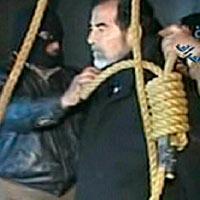


Saddam continues to haunt from beyond the grave. A tempest of sorts has erupted over the manner in which former Iraqi president Saddam Hussein was executed when he was hanged last Saturday in a Baghdad security facility. At the centre of the controversy is not so much the fact that he was executed, that was expected, but rather the manner in which the execution was carried out.

The proceedings looked more like the workings of a mob out to perform a lynching rather than the execution by a state of the former leader accused of crimes against humanity. The way Saddam was put to death on the morning hours of Saturday, the 30th of December, 2006, not only belittled the Iraqi government who is guilty of mishandling the affair, but it also reflected on the accused himself, giving the impression that he was a common horse thief rather than the mass murderer accused of some of the worst crimes against humanity.
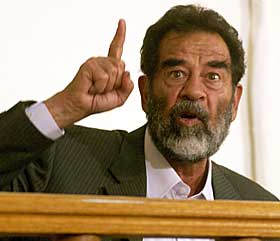


Saddam was found guilty of one of his "lesser crimes." The former Iraqi leader was tried for the death of 148 Shias. Meanwhile, far larger crimes such as the Iraq-Iran war, where nearly a million people lost their lives, will "conveniently" disappear. With Saddam dead he will never be able to answer questions regarding foreign involvement in the Iraq-Iran war; for example who gave him the chemical weapons? To what degree were the Americans and Europeans involved in convincing Saddam to go to war with Iran? Neither will Saddam be able to answer any questions regarding his invasion of Kuwait; nor will he be able to shed any light on who gave him the chemical weapons which he used against Iran and on Iraqi Kurds; nor will he stand trial for the deaths of approximately 300,000 Shias from southern Iraq, when he ordered his special forces to seek revenge on the Shias for their (failed) uprising in the aftermath of the invasion of Kuwait.
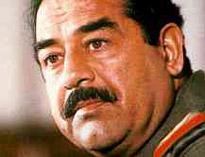


The scene of Saddam's final moments was not meant to be seen around the world. But thanks to modern technology and a simple cell phone with a built-in camera, someone was able to capture the scene and transmit it via the Internet for the whole world to see.

With Saddam's death the page is turned on one of Iraq's bloodiest leaders, at least in modern times. Regrettably though, his death does not close the chapter on violence, rather it risks inciting further violence between Sunnis and Shias.
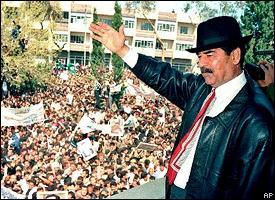


Indeed, the whole operation was mishandled from start to finish, including deciding to hold the execution on Eid al-Adha, the feast of the sacrifice, when traditionally leaders in the Muslim world pardon prisoners rather than execute them. To his supporters, this execution will forever be tied to the Adha, and may be seen as a martyr by some of his supporters.

Additionally, one begins to wonder if those in charge gave the whole process any thought. If the execution and the videotaping was not enough, to top if off, the Iraqis then allowed Saddam's body to be returned to his hometown of Tikrit. This will turn out to be a monumental mistake as Saddam's tomb will be turned into a lieu of pilgrimage. Already thousands of supporters have begun to flood the burial site.

Saddam issued his final advice to the Iraqi people from the gallows moments before he died. "Beware of the Persians and of the Americans. They are not to be trusted," Saddam said. Saddam has long regarded Iran as an archenemy, and did not hesitate to launch a protracted war with Teheran. By 1990, the war with Iran had emptied his state coffers and the oil-rich Gulf countries had cut back their financial support.
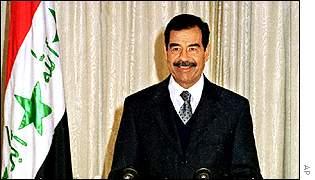


Strapped for cash, Saddam invaded neighbouring Kuwait, looking to grab their oil wells and the millions of dollars they generate. Saddam accused the Kuwaitis of "slant drilling" under the border into Iraqi land. He also used the pretext that Kuwait was Iraq's 19th province - and invaded. Saddam ransacked the tiny oil-rich emirate. His soldiers stole everything they could, from fancy European cars to the gold and currency reserves in Kuwait's Central Bank. Then, as the Iraqi Army began to retreat in the face of the rapidly advancing US-led coalition, they set fire to around 550 oil wells, causing an environmental disaster of gargantuan proportions. That is yet another crime he will not stand trial for.